
A New Iron Age Cart Burial

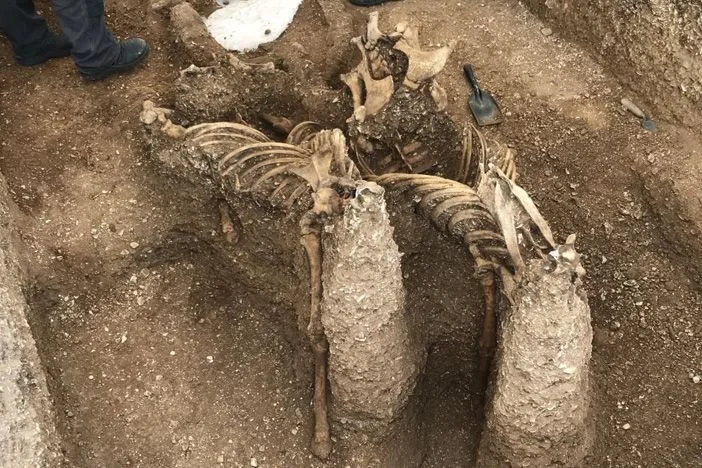
Archaeological news has kind of been made this week with the release of findings of a new Iron Age Cart Burial made on a Persimmon housing development in Pocklington initially discovered in 2017 (or possibly even earlier); ‘new’ therefore of course being a relative term. The findings were notified in archaeological magazines and accessible to public knowledge in 2019, but the site was purposefully kept under wraps in order to protect it while it was excavated, and during the house building process. As a result, it is only now that the site's existence is filtering into general knowledge as finds are relocated to safer (such as museum-based) storage locations.
As you may be aware, my BSc dissertation was a desktop study that created a database of finds in excavated UK Iron Age Cart Burials; the Pocklington site is the first one therefore not present on my database.
Some Links From the Past:
Current Archaeology: Further chariot burial discovered at Pocklington
[Smithsonian Magazine: Archaeologists Unearth Celtic Warrior Grave Complete With Chariot, Elaborate Shield](https://www.smithsonianmag.com/smart-news/celtic-chariot-grave-found-england-includes-horses-and-elaborate-shield-180973730/#:~:text=Archaeologists Unearth Celtic Warrior Grave Complete With Chariot%2C Elaborate Shield,-One expert hailed&text=An Iron Age chariot burial,of Celtic art and weaponry.)
Wikipedia: Pocklington Iron Age burial ground
My BSc Database links/accessibility document
My Original BSc Database driven through MDB Viewer Plus (difficult to use)
My BSc Database moved into Google Sheets (more usable)
My Research Blog on the completion of the BSc: Research is Not Completed on the Moon
Please note: I leave my work in the public arena for use, and am happy for it to be used. If you do use it however, please reference the work, and let others know where you found it. My work was based on yet more work by authors, institutions and researchers who are all referred to in my pieces, and they should be able to be traced and acknowledged for their contributions. If you directly use their contributions, please do reference them, not me. Thank you.
So from an initial, very brief glance (I do not have access to the findings but will buy the new book), how does it compare to earlier burials do we think? Geographically, a Yorkshire location is normal for these burials. The human remains are crouched, as with other finds, but I do not know the cardinal positioning to compare that element. Pig and horse remains have both been seen previously, pig remains for feasting is usual, although the use of piglets as opposed to more mature animals may be more rare. The cart burials are often found with other burials, and within contemporary cemeteries, with other human remains present; I’m not certain I have previously seen any of these specifically described as a human sacrifice but I would not wish to offer a comment on this with no knowledge; I’ll look for a non-media source for this in the book. What is very unusual is the posing of the horses as if they are leaping out of the gravesite, and the upright position of the cart, rather than this being disassembled. The inclusion of horses is fairly unusual (though not unknown) in the UK cart burials discovered so far, and where they are present, they are rarely part of the central focus.
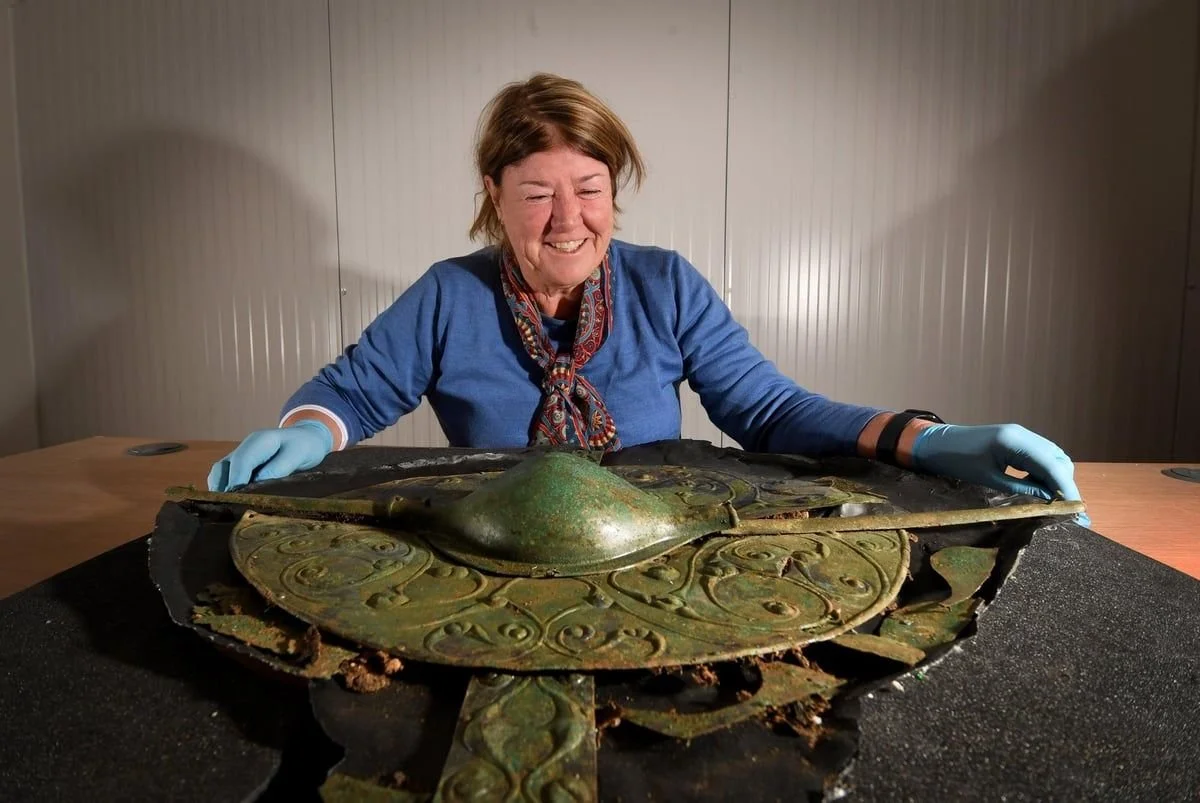
A select few chosen items as grave goods, in this case the shield and the brooch, are similar to other UK cart burials. The shield has had a great deal of attention, but given the shield was used and weaponry and/or skeletal injuries have appeared before in these burials I personally would have more interest in the brooch, or anything that resembled a personal marker. This is a private interest though, as during my studies I felt cart burials may denote messengers, and a recognisable item may be a marker of some kind, as in the case of the Wetwang Slack Bean Tin.
I may update this post at a later date, but as my family have all been telling me that a new chariot burial with an amazing shield is on display, and this is presently hot news in my little world, I wanted to put this post out as an area of personal interest, and also to say have a look at this if you’re in to non-fiction; these people were fascinating and there are definitely worse subjects to read about!
